

Every gap between cloud workloads, on-premises data centers, SaaS applications, campus networks, and remote endpoints is an opportunity for attackers. Yet, most organizations have security infrastructure consisting of a patchwork of tools each with its own console and policies.
Fragmented architectures create blind spots, inconsistent protections, and seams where threats slip through. The need for an integrated architecture-driven approach to cybersecurity has never been more urgent.
The Business Problem: Fragmented Security Environments
As new technologies and systems are adopted (like SaaS apps, remote work, mobile devices) security controls often get added on a per-need basis using the most readily available tools at the time. Overtime, this results in a patchwork of disconnected point solutions deployed across business units, environments and locations.
This fragmented architecture is not unusual but rather it is the byproduct of business growth, digital transformation and decentralized IT decision making. The result is a system where:
- Different teams manage different tools, each with its own policy language, update cadence, and operational procedures
- Security alerts are siloed, requiring manual correlation between systems before an incident can be fully understood or contained
- Threat intelligence is not shared across environments, meaning cloud platforms may block what endpoint systems allow, or vice versa
- Policy drift occurs over time, as controls are updated inconsistently, resulting in redundant, contradictory, or outdated rules
- Visibility is inconsistent, leaving blind spots across certain segments of the network, particularly in cloud or remote access scenarios
From an attacker’s perspective this fragmentation is a strategic advantage. Threat actors know that inconsistent enforcement creates vulnerabilities. For example:
- A phishing email that evades endpoint detection may lead to credential theft, followed by lateral movement across the internal network where segmentation is weak
- A misconfigured firewall in a branch office might expose services that are otherwise protected at the corporate perimeter
- Disparate identity systems may allow attackers to bypass MFA in one domain while it’s enforced in another
When an incident spans multiple systems, analysts must pivot between multiple dashboards and logs to reconstruct the attack. Every minute lost to this complexity increases potential damage. In short, fragmented security doesn’t just lead to inefficiencies, it creates risk.
The Solution: Hybrid Mesh Security Architecture
To address the risks and inefficiencies of fragmented security environments, organizations need a new architectural approach. Hybrid Mesh Security Architecture (HMA) is that solution.
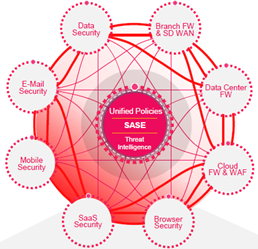
HMA is a unified security framework that enables consistent policy enforcement, integrated visibility, and centralized management across all environments, it replaces the siloed sprawl of disconnected tools with a single, coordinated fabric of control.
What It Does
- Eliminates Policy Silos: Security policies are defined once and enforced consistently across the entire infrastructure reducing gaps and misconfigurations
- Unifies Threat Prevention: Shared threat intelligence and coordinated enforcement ensure the same protections apply to endpoints, cloud assets, network traffic, and users, regardless of location
- Enables Real-Time Visibility and Response: A central management layer correlates telemetry from all domains, allowing teams to detect and respond to threats with full context and speed
- Reduces operational complexity: Consolidating tools and processes across environments improves efficiency, reduces training overhead, and streamlines compliance
Key Takeaway
As enterprise IT environments grow more distributed, attackers will continue to exploit the disconnect between security domains. A Hybrid Mesh Security Architecture provides the unified, intelligent and adaptive framework needed to defend against modern threats, while simplifying operations and reducing cost.
At VCURA Cybersecurity, we help organizations transition from fragmented defense to unified protection. Contact us at sales@vcura.com for more information and let us help you simplify, unify, and secure your environment.